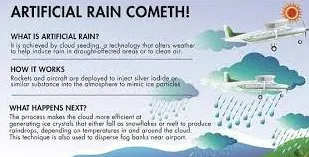
Artificial precipitation, also known as cloud seeding, is the process of increasing precipitation by dispersing certain chemicals into the atmosphere. These chemicals act as nuclei around which water vapor can condense, forming raindrops.
The Delhi government is considering using artificial rainfall to reduce air pollution in the city. Air pollution is a major problem in Delhi and can cause serious health problems for residents. Artificial rain can help remove pollutants from the air by washing them with rain.
However, there is some debate about the effectiveness and safety of artificial rain. Some studies have shown that it can be effective in increasing precipitation, but others have shown that it has little or no effect. There are also concerns about the potential environmental effects of artificial rainfall.
The Delhi government is currently working with experts from the Indian Institute of Technology Kanpur to develop an artificial rainfall scheme. If the plan is approved, the government will have to seek permission from the Supreme Court before proceeding.
Here are some potential benefits of artificial rainfall in Delhi:
Reduced air pollution: Artificial rain can help remove pollutants from the air by washing them away with rain. This can improve air quality and reduce the risk of health problems for residents.
Increase in water supply: Artificial rainfall can also help in increasing water supply in Delhi. This is important because Delhi is a water-scarce city.
Improved crop yield: Artificial rainfall can also help improve crop yield in Delhi. This is important for food safety.
However, there are also some potential risks associated with artificial rain:
Environmental Effects: There are concerns about the possible environmental effects of artificial rainfall. For example, chemicals used in cloud seeding can have negative effects on plants and animals.
Unintended Consequences: There is also a risk of unintended consequences of artificial rainfall. For example, if excessive rainfall occurs, it can lead to flooding.
Overall, the potential benefits and risks of artificial rainfall in Delhi need to be carefully considered before any decisions are taken.