
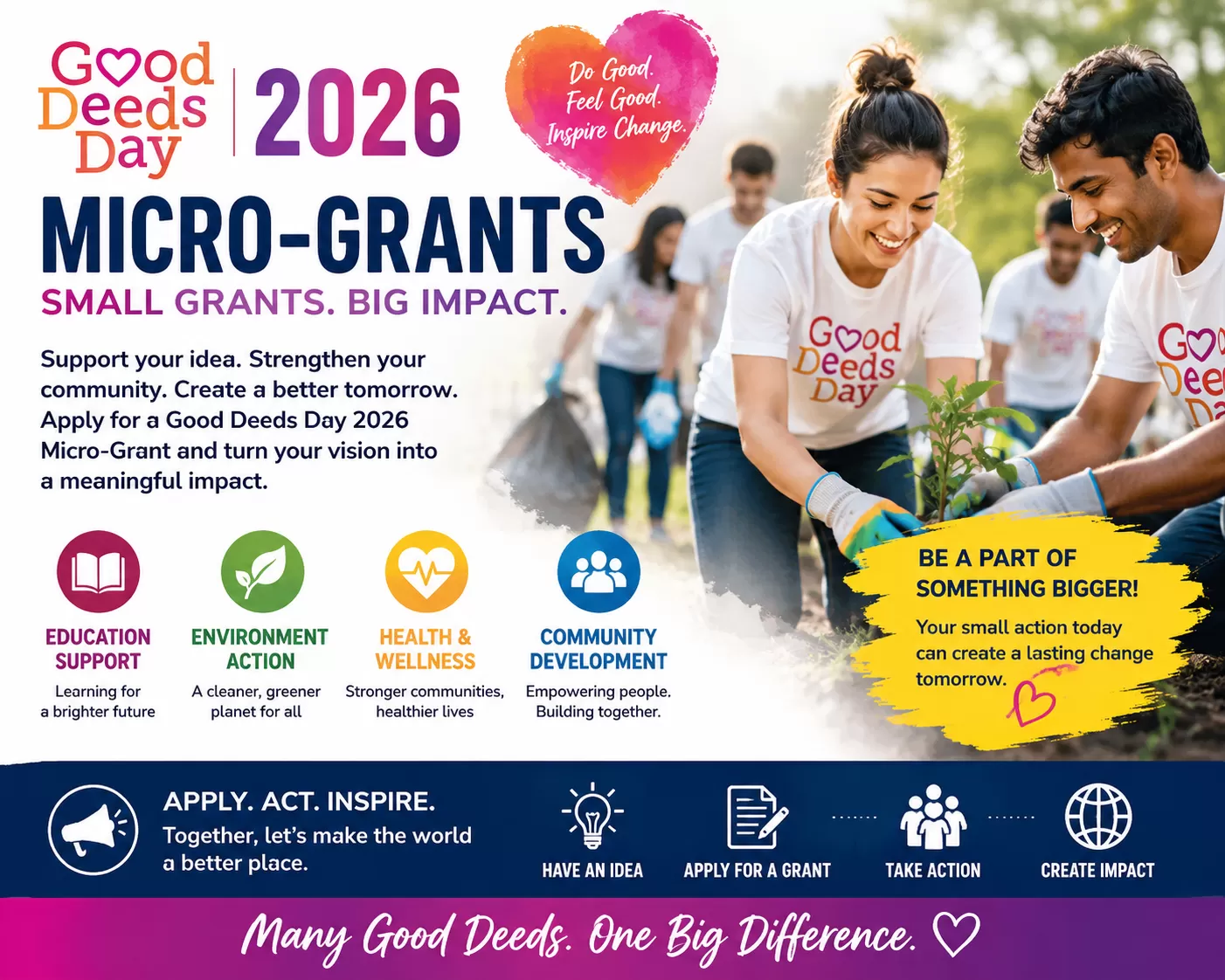
Good Deeds Day (GDD) 2026 Micro-Grants: Empowering Communities Through Small Acts of Kindness
Every year, millions of people across the globe come together to celebrate the spirit of kindness and social impact through the global movement known as Good Deeds Day 2026. In 2026, the initiative is taking community empowerment one step further with the launch of the Good Deeds Day 2026 Micro-Grants Program, designed to support individuals, youth groups, NGOs, schools, and community leaders who want to create meaningful change in society.
These micro-grants are more than just financial support — they are opportunities to transform ideas into action and encourage people to contribute positively to their communities.
What Are Good Deeds Day 2026 Micro-Grants?
The Good Deeds Day 2026 Micro-Grants program offers small-scale funding to support community-driven projects focused on social welfare, education, environmental sustainability, health awareness, youth empowerment, and volunteer activities.
The aim is simple:
Support ordinary people with extraordinary ideas that can create a lasting impact.
Whether it is organizing a cleanliness drive, helping underprivileged students, planting trees, conducting health camps, or promoting digital literacy in rural areas, these grants help communities turn compassionate ideas into reality.
Why These Micro-Grants Matter
Many passionate individuals and small organizations have powerful ideas but lack the financial resources to implement them. The GDD Micro-Grants initiative bridges this gap by encouraging grassroots-level participation and empowering local changemakers.
Key Benefits of the Program:
- Encourages community service and volunteerism
- Supports youth-led social innovation
- Promotes sustainable local development
- Helps NGOs and social groups expand outreach
- Inspires collaborative efforts for public welfare
- Creates opportunities for rural and urban participation
These grants prove that even small contributions can create significant social transformation.
Areas Where You Can Contribute
Participants can use the grants for a wide range of impactful activities, including:
Education Support
- School supply distribution
- Digital learning workshops
- Career guidance sessions
- Skill development programs
Environmental Initiatives
- Tree plantation drives
- Plastic-free campaigns
- Water conservation awareness
- Community cleanliness projects
Health & Wellness
- Health awareness camps
- Blood donation drives
- Mental health workshops
- Nutrition awareness programs
Community Development
- Women empowerment activities
- Rural employment training
- Support for elderly citizens
- Food donation campaigns
How Individuals and Organizations Can Participate
Anyone with a meaningful social impact idea can apply and contribute through the program. Schools, colleges, NGOs, startups, youth clubs, and independent volunteers are encouraged to participate.
Basic Steps to Contribute:
- Identify a social issue in your community
- Create a simple action plan
- Apply for the micro-grant
- Implement the project with volunteers
- Share the impact and inspire others
The focus is not on the size of the project but on the value it creates for society.
The Power of Small Good Deeds
One of the strongest messages behind Good Deeds Day 2026 is that small acts of kindness can create a chain reaction of positive change.
A single initiative can inspire hundreds of people. A small grant can educate children, clean neighborhoods, support struggling families, or improve environmental awareness.
Communities grow stronger when people work together with compassion and responsibility.
Youth Participation Is the Future
Young people are becoming powerful agents of change. Through the GDD 2026 Micro-Grants initiative, students and young entrepreneurs have an opportunity to showcase leadership, innovation, and social responsibility.
By participating in social impact activities, youth gain:
- Leadership experience
- Teamwork and communication skills
- Real-world problem-solving abilities
- Community recognition
- A sense of social responsibility
Programs like these not only improve communities but also shape future leaders.
No comments yet. Be the first to comment.